Tic Tac Toe Game Play Online Desktop & Mobile
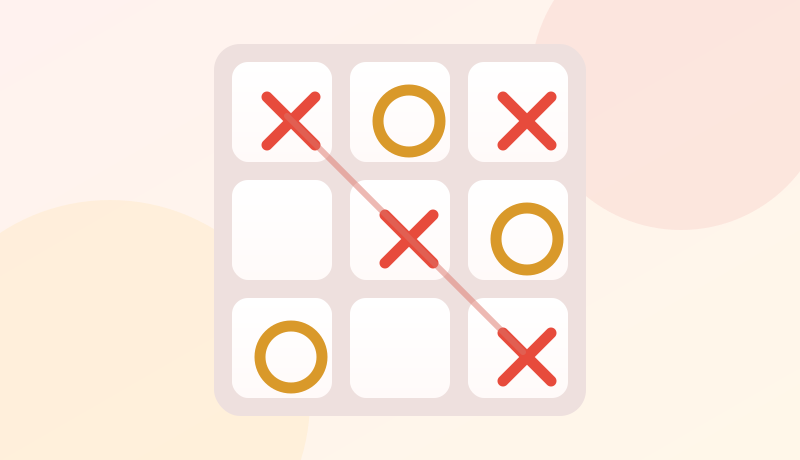
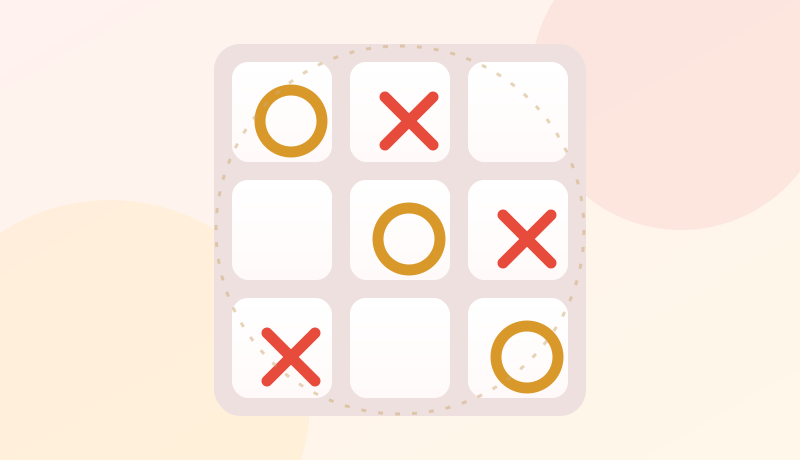
Tic Tac Toe is a game of small decisions with immediate consequences. Two players share a three-by-three grid, one placing Xs and the other placing Os. A mark stays where it is for the rest of the round, so every choice changes the possibilities for both players. The goal is easy to understand: complete a straight line of three before your opponent does.
Also called noughts and crosses, the game works just as well for a quick break as it does for learning to think ahead. There are only nine squares, yet a move that looks harmless can create two threats at once. Short rounds make it easy to experiment, spot a mistake, and try a different idea immediately.
PlayTicToe brings that familiar experience into your browser. The raised tiles give each move a little depth, while animated marks make the board easy to follow. Sound is optional and starts muted. Turn indicators, clear results, and a running scoreboard keep the important information close to the game. Choose your opponent above and start playing without creating an account.
Is Tic Tac Toe a Solved Game?
Yes. A solved game is one where the outcome under perfect play is known. For standard Tic Tac Toe, that outcome is a draw: neither player can force a win if the other always responds correctly. A winning streak against beginners does not change that mathematical limit.
Our Hard computer uses minimax. It explores the remaining legal moves, considers the opponent’s strongest replies, and chooses a move with the best guaranteed outcome. It takes a win when one is available and avoids a loss when a draw is possible. Because this board is small enough to search completely, Hard does not need to guess. Holding it to a draw is the challenge.
Perfect play + perfect play = a drawBest Tic Tac Toe Strategy To Win
Before each move, scan the whole board. Ask whether you can win immediately, whether your opponent can win next, and whether either player is building a fork. This short routine is more useful than memorizing one opening sequence because it works from either side of the board.
Take the win. Then make the block.
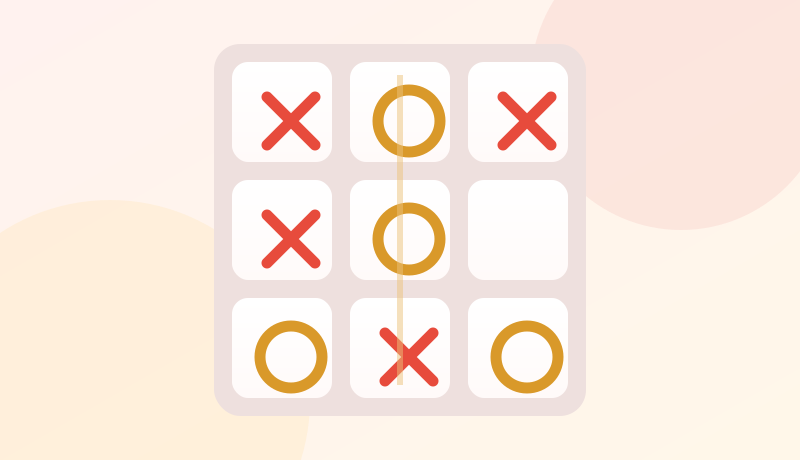
If two of your marks share a line with an empty square, completing it wins right away. Otherwise, check for the same threat from your opponent and block it. Beginners often keep building their own line while overlooking an immediate loss elsewhere. Check rows, columns, and both diagonals, including lines far from your latest move.
Use the center and corners thoughtfully.
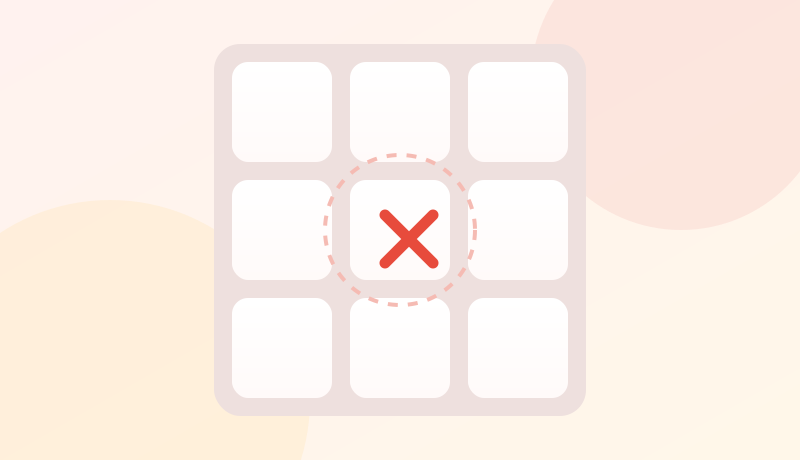
The center belongs to four winning lines; each corner belongs to three, and each edge to two. That makes the center a flexible early move and corners useful partners. These are guidelines, not rules that override a threat. An edge can be the only safe move when your opponent is setting up a fork.
Create two threats at once.
A fork is a position with two different squares that would each complete a winning line on your next turn. Your opponent can usually block only one. For example, holding the right combination of corners can threaten a row and a column at the same time. Before chasing a fork, make sure your opponent cannot simply win first.
Learn when defense is the best move.
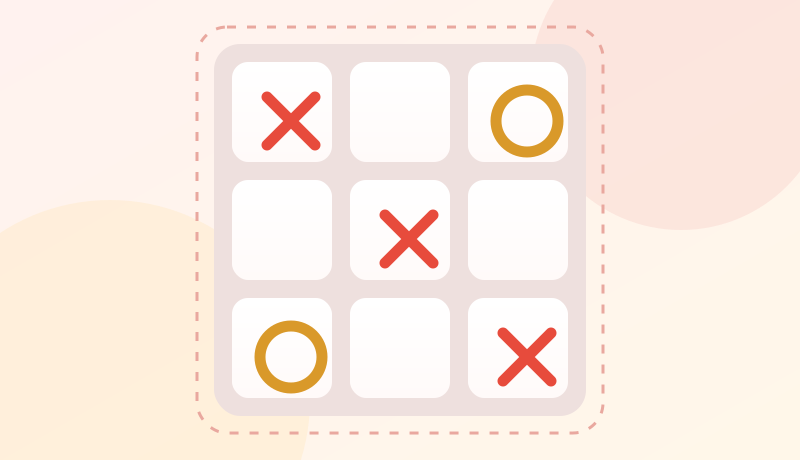
If your opponent holds opposite corners and you hold the center, an edge is often needed to prevent a fork. Trying another corner without checking the replies can lose. To practice, replay a position in Local 2 Player and examine both sides. Against Hard, focus on removing threats rather than forcing an attack that is no longer possible. A safe draw is better than a hopeful mistake.
Play Tic Tac Toe Against the Computer
The four levels offer different ways to practice. The computer always chooses a legal empty square and waits briefly before replying, so you can see how the position changes. During that pause, your next move is locked. Changing the mode or difficulty clears the round and cancels any pending reply.
Easy picks randomly from the available squares. It can miss a winning move or leave a threat unblocked. Use this level to learn the rules, recognize lines, and build confidence without having to anticipate every reply.
Average combines sensible priorities with a chance of a random move. It sometimes misses opportunities and sometimes defends well. This is our own casual decision system; it is not trained on player records or based on someone else’s game data.
Medium takes immediate wins, blocks immediate losses, and recognizes some forks. It then favors the center and corners. Its limited long-term planning leaves room to outmaneuver it, making it useful for practicing combinations beyond a single move.
Hard searches the complete remaining game tree with minimax and alpha-beta pruning. It plays correctly with either symbol. You cannot force a win against it, but you can learn to keep a position safe and consistently earn a draw.
Play Tic Tac Toe With a Friend Locally
Choose Local 2 Player and share one device. Player 1 begins with X and Player 2 with O. After each tap, the turn message identifies who should play next. You can use a mouse, a touchscreen, or the keyboard: move between squares with the arrow keys and place a mark with Enter or Space.
New Game and Play Again swap the participants’ symbols so that each person gets a chance to start. Scores stay attached to the person, not the symbol. Restart round clears only the current board and keeps the same assignments. Reset scores asks for confirmation and affects only the current mode’s record. This makes it easy to play a short series without mixing it with your computer results.
There is no login, download, or connection to another player’s device. Both people play on the same screen, and the game logic runs locally in the browser. Once the page is loaded, moves do not need a game server. Your preferences and finished-round scores remain on this browser when storage is available; they do not follow you to another device.
Frequently Asked Questions
Can you always win at Tic Tac Toe?
No. If both players choose the best available moves, the result is a draw. You can win when an opponent makes a mistake, but there is no opening that guarantees victory against perfect play. Against Hard, aim to finish without losing; a draw is a successful result.
What is the best first move in Tic Tac Toe?
The center is a useful opening because it belongs to four winning lines. A corner is also a strong choice and can help create forks. Neither guarantees a win. Look at your opponent’s reply before choosing your next square, rather than following a fixed pattern.
Who goes first in Tic Tac Toe?
X always makes the first move here. After you choose New Game or Play Again, participants swap symbols, sharing the first-move advantage. Your symbol appears beside your name on the scoreboard. Restart round clears the board while keeping the same symbol assignments.
Can I play Tic Tac Toe against the computer?
Yes. Choose Vs Computer and select Easy, Average, Medium, or Hard. The computer responds automatically after a short thinking pause. You can change difficulty at any time; doing so starts a fresh board. Each difficulty has its own saved score record.
Can two people play Tic Tac Toe on the same device?
Yes. Local 2 Player lets you and a friend take turns on one phone, tablet, or computer. Follow the current-player message and pass the device after each move. Wins belong to Player 1 or Player 2 even when their X and O symbols swap.
Is this Tic Tac Toe game completely free?
Yes. Both game modes and all four computer difficulties are free, with no account or game download required. Scores and preferences are saved in this browser when local storage is available. Clearing your browser’s site data also clears those records.