How to Win at Tic Tac Toe Every Time: Strategies to Never Lose
Can you really win Tic Tac Toe every time? Not against a perfect opponent. Standard 3×3 Tic Tac Toe is a solved game: when both players choose their best moves, the result is a draw. But learning a reliable Tic Tac Toe winning strategy can help you avoid unnecessary losses and turn opponents' mistakes into victories. That is a much more useful goal than looking for a magic opening move.
The secret is to recognize threats before they become wins. You need to know when to finish a line, when to block, and when to create a fork—a move that threatens two winning lines at once. This guide teaches that process with numbered squares and practical examples. When you want to test what you learn, play Tic Tac Toe online for free against the computer or a friend on the same device.
Why You Cannot Guarantee a Win Every Time
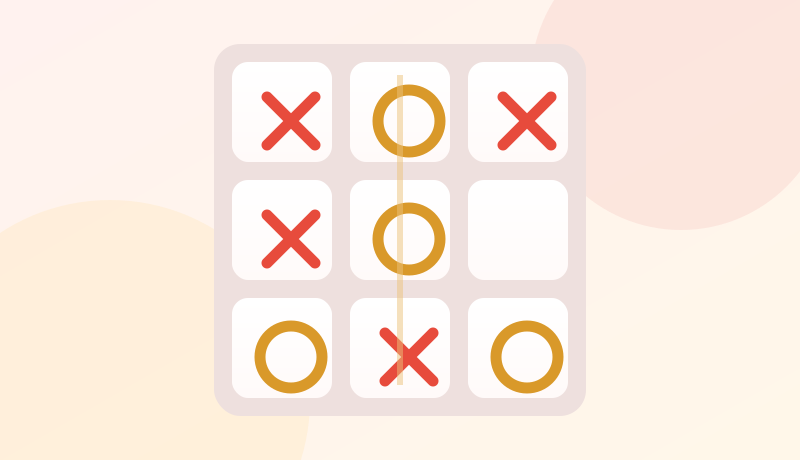
In classic Tic Tac Toe, two players alternate placing X and O on a nine-square board. The first to complete three matching marks horizontally, vertically, or diagonally wins. There are eight possible winning lines: three rows, three columns, and two diagonals.
Because the board is small, every legal continuation can be examined. A careful opponent can always defend well enough to avoid defeat from the empty starting position. Consequently, no first move forces a win if the other player responds perfectly. A promise to “always win” usually leaves out that condition.
The Tic Tac Toe Strategy Checklist
Before every turn, ask these questions in order:
- Can I win immediately? If you have two marks in an open line, place the third.
- Can my opponent win next turn? Block their open third square unless your immediate win already ends the game.
- Can I create a fork? Look for a move that leaves two different winning squares available on your next turn.
- Can my opponent create a fork? Prevent it, sometimes by making a threat that forces their response.
- Which square offers the strongest position? Only after urgent threats are handled should you consider the center, opposite corner, another corner, or an edge.
This is more dependable than memorizing a single picture. An attractive square is worthless if your opponent already has an immediate win. Likewise, blocking one threat is not enough if you leave a second, unanswerable threat.
Understand the Board Numbers
We will number the squares from left to right, top to bottom:
 1 | 2 | 3
---+---+---
 4 | 5 | 6
---+---+---
 7 | 8 | 9
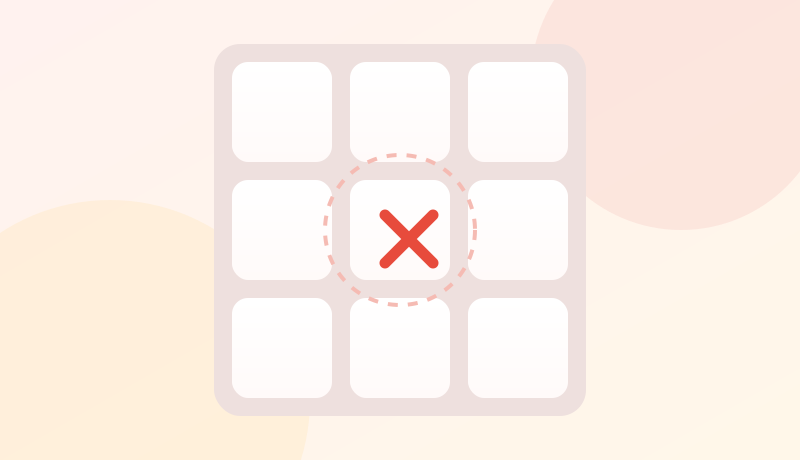
Square 5 is the center. Squares 1, 3, 7, and 9 are corners. The others are edges. The center belongs to four potential winning lines, every corner to three, and every edge to two. That makes the center flexible, but tactical threats still take priority.
How to Win Tic Tac Toe When You Go First
If you play X and go first, both the center and a corner are sound openings. Neither guarantees a win against accurate defense. The center makes a simple plan easier to visualize because it connects four lines. A corner can put more pressure on an inexperienced opponent because only the center is a safe first reply to a corner opening.
Suppose you begin at square 1 and O replies at square 3. Play X at square 7. You now threaten the left column, squares 1–4–7. O must respond at 4. Your next move at square 9 creates two threats: the bottom row at square 8 and the diagonal through the center at square 5. O cannot block both, so X wins on the following move.
For a detailed comparison of openings, read Best First Move in Tic Tac Toe: Center or Corner?.
How to Avoid Losing When You Go Second
Playing O means answering the first move correctly. Your first response can determine whether a draw remains available.
- X starts in a corner: Take the center. Other replies let a flawless X eventually force a win.
- X starts in the center: Take any corner. An edge response can allow X to force a winning fork.
- X starts on an edge: The center is an easy, safe choice. Some other responses also draw, but they require more care.
After that first reply, avoid blindly following opening rules. Inspect the complete board each turn. If X has two marks in an open row, block immediately. If X controls opposite corners while you control the center, an edge may be needed to prevent a fork. If you create an immediate threat of your own, X may have to respond defensively, buying you time.
You cannot force a win against perfect X play, but you can capitalize on mistakes.
What Is a Fork in Tic Tac Toe?
A fork is a position in which a single move creates two separate immediate winning threats. Your opponent gets only one move, so cannot fill two different empty squares. Forks often decide games between players who already understand basic blocking.
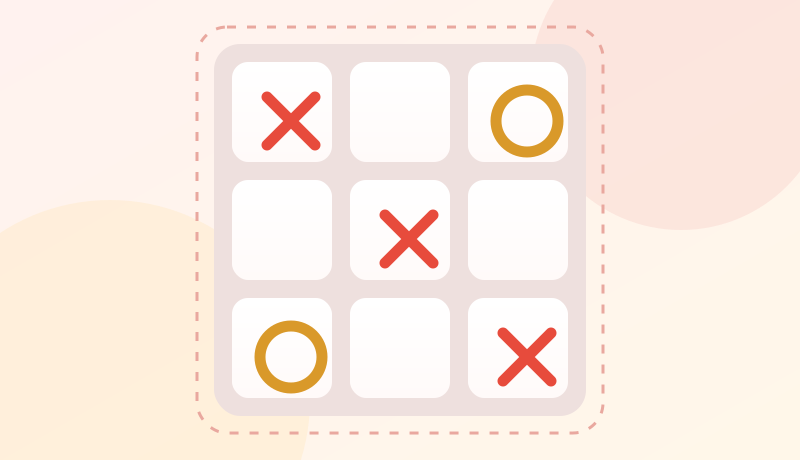
Consider this board, with X to move:
 X | O | .
---+---+---
 . | X | .
---+---+---
 . | . | O
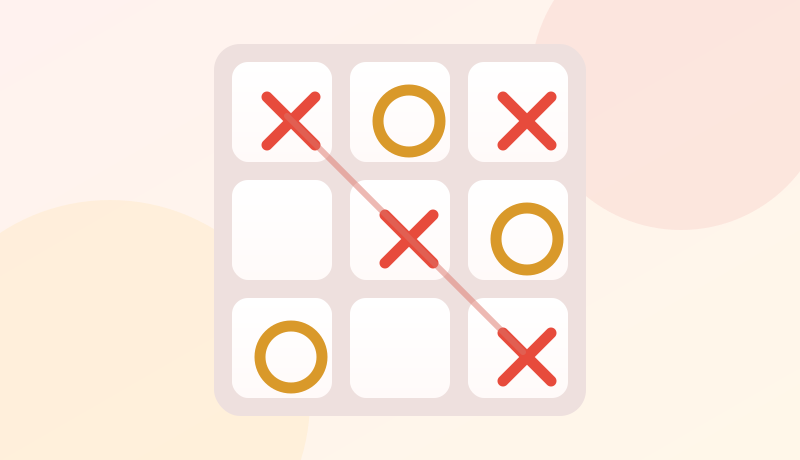
If X places a mark at square 7, check what is truly threatened. X would then have marks at squares 1, 5, and 7: the left column could be completed at 4, and the diagonal 3–5–7 could be completed at 3. Those are two distinct winning squares, so this is a real fork. O cannot block both on the next turn.
When looking for forks, do not merely count intersecting lines. Confirm that each line contains two of your marks, one empty square, and no opponent mark after the proposed move. A line containing O cannot become an X win, however promising it appears.
How to Block an Opponent's Fork
Start by identifying the square where the opponent could create two threats. Sometimes occupying that square prevents the fork. In other positions, a better defense is to create your own immediate threat and force the opponent to block instead of developing their fork.
One classic warning: when X holds two opposite corners and O holds the center, O should normally play an edge, not another corner. Taking the wrong corner may let X establish threats in two directions. If you are unsure, consider the opponent's next two moves rather than looking at just one.
Common Tic Tac Toe Mistakes That Cause Losses
Forgetting to Win Before Blocking
If you can win now, take the victory. Players sometimes see a dangerous-looking opponent line and block it even though completing their own line would end the game immediately. Always check your immediate win first.
Assuming the Center Always Solves Everything
The center is valuable early, but taking it does not repair a missed threat. If the opponent already has a winning move available, occupying the center for positional reasons may lose the game.
Ignoring Diagonal Lines
Diagonal threats are easy to miss because players naturally scan horizontal and vertical marks. Before every move, check both diagonals, especially when someone occupies the center.
Chasing a Win Against Perfect Defense
An impatient player may abandon a safe draw to pursue a trap that cannot work. Against a strong opponent, maintaining the draw is an achievement. A risky move does not become good simply because it looks aggressive.
A Simple Practice Routine That Improves Results
Play three short sets of games. First, play as X and concentrate on recognizing forks. Next, play as O and practice correct replies to center and corner openings. Finally, use the hardest computer setting available and make your goal three consecutive draws. Review the first turn on which you missed a block, allowed a fork, or chose a weaker continuation.
For computer-specific practice, see How to Beat Impossible Tic Tac Toe.
Further Reading
For a mathematical explanation of why perfect games draw, see Wolfram MathWorld's Tic-Tac-Toe reference. For the history of the game's strategic decision rules, compare the Tic Tac Toe strategy overview. These sources support the distinction between sound drawing play and exploiting a mistake.
Frequently Asked Questions
Can you win Tic Tac Toe every time?
No. If both players make optimal moves, classic 3×3 Tic Tac Toe ends in a draw. You can avoid losing with correct play and win when the other player creates a position that allows a forced victory.
What is the best Tic Tac Toe winning strategy?
Check for an immediate win, then an immediate block, then forks and fork prevention. Use center and corner preferences only when no urgent tactical move is required.
How do you win Tic Tac Toe going second?
You cannot force a win against perfect first-player play. Reply to a corner with the center, reply to a center with a corner, and defend threats. Take advantage if the first player makes a mistake.
Is a corner better than the center?
Both openings can preserve a draw. The center offers four connected winning lines; a corner may create more mistakes from inexperienced opponents. Neither automatically wins.
Can I practise these strategies online for free?
Yes. Play Tic Tac Toe against the computer or a local friend, then try to explain why each move wins, blocks, forks, or preserves a draw.